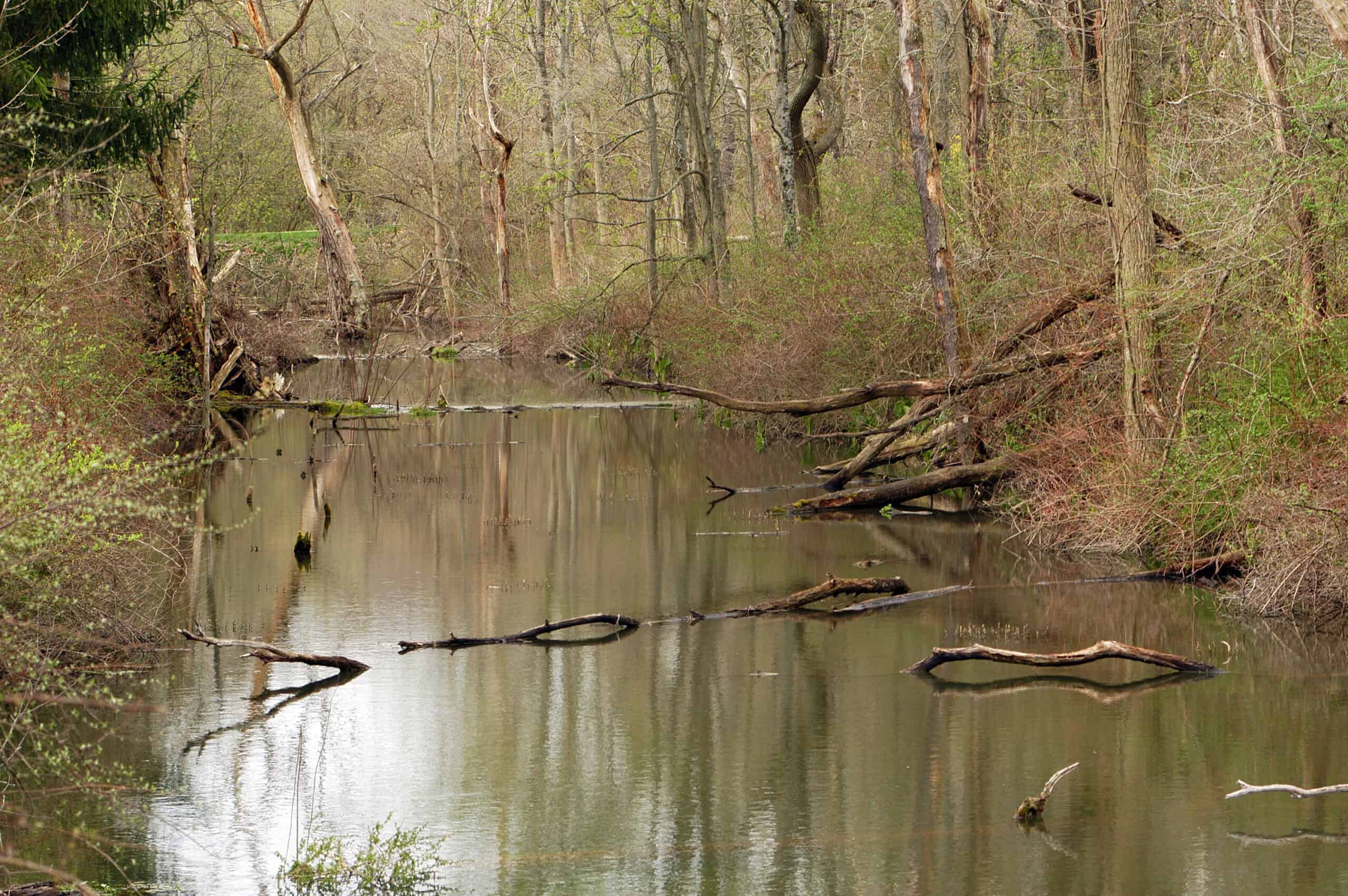
(This week’s civic education and engagement column from Danville’s The Republican newspaper.)
They account for a mere 1.4 percent of our total acreage, and yet they’re one of the biggest reasons people move to – or stay in – Hendricks County.
The quality of the county’s six public school systems is widely recognized as one of the primary attractions for residents. But the second reason is cited just as often. It’s the many beautiful parks and well-cared-for trails found throughout the county. In fact, there’s a grand total of 40 parks and better than 121 miles of trails within Hendricks County. Those parks and trails draw roughly 2,000,000 visits a year from locals and out-of-towners, says Katy Cummings, who may be the county’s biggest cheerleader for parks and trails.
As the executive director of the Parks Foundation of Hendricks County, Katy promotes all those parks and trails at every opportunity. Her organization also awards grants to efforts to improve local parks. But when she mentions “local parks,” she isn’t talking about a single government body.
Parks and trails throughout Hendricks County are owned and operated by a surprisingly wide mix of local governments and nonprofit organizations. Specifically, that includes the county park district, park departments in five towns, two township park departments, and nonprofits such as the Central Indiana Land Trust and the B&O Trail Association. Combined, all those groups employ more than 800 people, from naturalists to groundskeepers to lifeguards and everything in between. (You can find a map and more information at www.pfohc.org/explore-our-parks.)
Who is responsible for each of those parks can be confusing. For example, many Plainfield residents assume Hummel Park is part of the town’s parks department, but it’s actually owned and operated by Guilford Township. Similarly, folks living in Washington Township enjoy parks run by the Township and others operated by the Town of Avon.
Hendricks County didn’t have its own parks department until 2000. Since then, the county has been responsible for developing McCloud Nature Park, W.S. Gibbs Memorial Park, and portions of the Vandalia Trail (which will one day be a key segment of a trail from Illinois to Ohio). The county parks department’s annual budget is $1.5 million, $686,320 of which comes from the county’s general fund. If that sounds like a lot of general fund money, divide it by the county’s current population of just over 179,000, and you’ll discover that operating county parks and trails costs each resident a whopping $3.83/year.
Other local parks also receive a tiny portion of property tax dollars. The rest of their needs are met through a series of special taxes and fees that, depending upon the department, may include local impact fees for new construction, taxes on local hotel stays, taxes on bar and restaurant checks, and fees for things like renting shelters. As with the county, the share of each resident’s taxes funding parks is remarkably small – especially when you consider the quality.
As the county grows, local officials have opened new parks, and plans for additional park and trail development are underway. The biggest current project is Plainfield’s development of what was originally a county park named for Myotis Sodalis, better known as the endangered Indiana Brown Bat. In the 1990s, as part of the Indianapolis airport’s expansion, land was set aside to protect the bat’s habitat and maintain wetlands. In 2018, Plainfield bought the park and the surrounding land, which at nearly 1,800 acres is roughly the same size as McCormick’s Creek State Park. The town renamed the property Echo Hollow Nature Park and plans to gradually transform it into a regional destination with expanded trails, shelters, camping, and other amenities.