(This week’s civic education and engagement column from Danville’s The Republican newspaper.)
There’s a perception that everything to do with public education is inherently broken and desperately needs to be fixed. Generally, people making that statement have what they believe to be an obvious solution that’s being ignored by clueless school boards and bureaucratic administrators.
A great example is the common reaction to the inaccurate perception that Indiana schools are among the nation’s most elaborate and expensive.
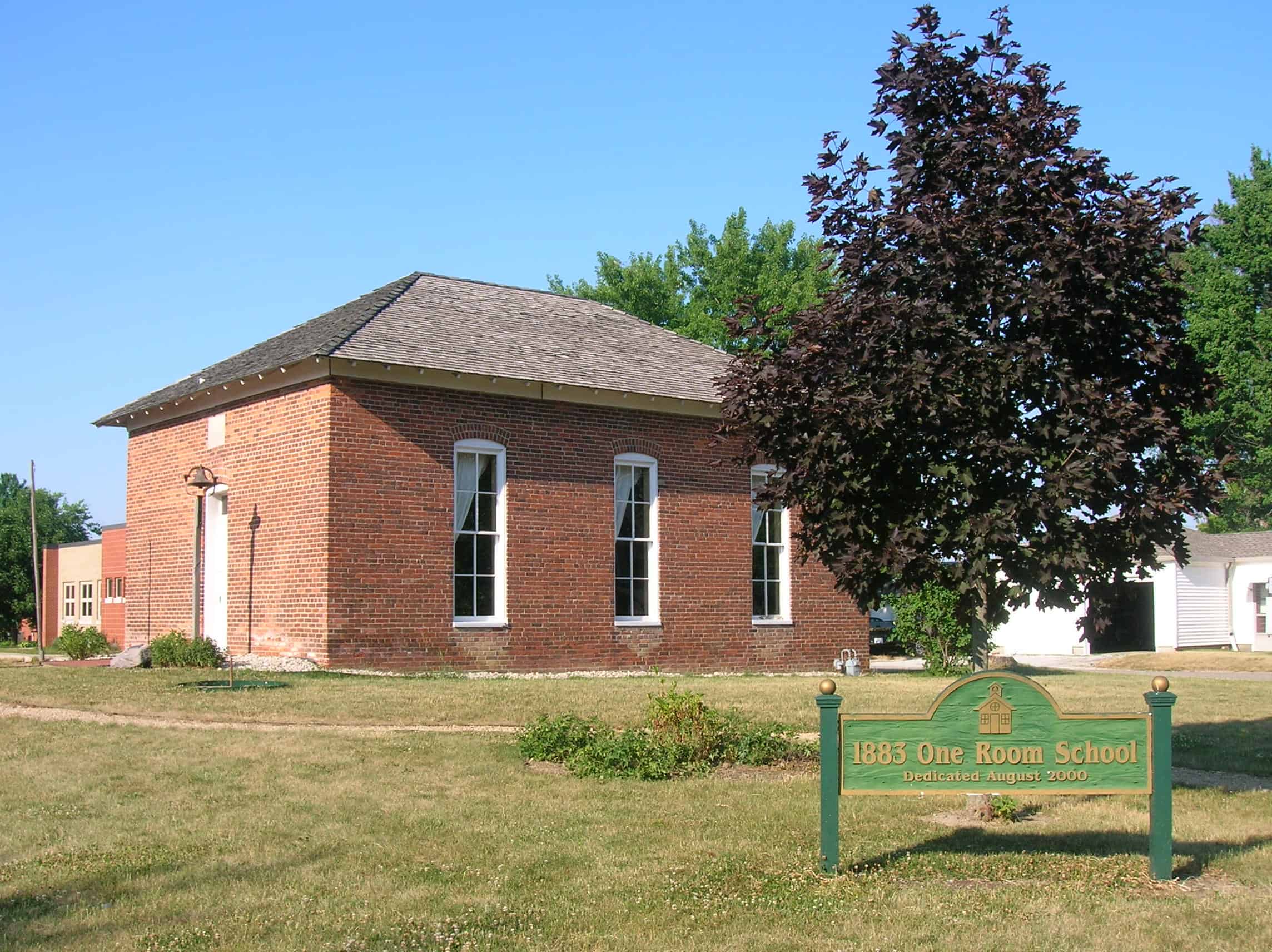
The “smart solution” that’s often floated when the cost of building schools comes up is sometimes referred to as the “little red schoolhouse” idea. It goes back to the day when school districts throughout the nation built those seemingly identical one-room schoolhouses. They didn’t need fancy designs or complicated engineering, so they were easy to duplicate. Advocates don’t see any reason for school districts to spend money having architects and engineers design unique buildings. Instead, the state could adopt three or four standard designs and let the schools use them for free, saving the taxpayers millions of dollars of those exorbitant architecture and engineering fees. Makes sense, right?
Well, not so much. For starters, Indiana’s topography, geology, and climate vary wildly. Schools up in Michiana need roofs capable of handling those Biblical events known as lake-effect snowstorms. Those around Evansville may not need to worry about heavy snow, but seismic activity and soil composition often create requirements for more complex foundations. Water for fire protection at a Hendricks County school is easily accessed, but a school in a rural county that’s miles away from the nearest firehouse or water main needs special engineering to contain the spread of flames and smoke until the fire trucks can get there. That rural school might also be built on varying grades instead of a flat field.
Even when the conditions are similar, differences in sites create unexpected complexities. How a building is oriented on a site affects the amount of artificial lighting needed and how much energy will be required to heat and cool the building. These and many other variations make it impossible to develop a blueprint that’s suitable for use everywhere in the state.
For architects and engineers, there’s an even bigger issue: professional liability. Few would be willing to hand those “universal” plans over to the state without extensive legal protection. Suppose nobody realized their design wasn’t compatible with a particular type of soil, and a portion of a school collapsed ten years later, injuring several students. Could they be held liable? Overseeing this new “little red schoolhouse” concept and updating the standard plans to match constantly changing building codes would likely also require the creation of a new state-level bureaucracy.
The last argument against standardized building plans for schools is the fact that the cost of buildings has less to do with the design process, and more to do with the current state of the construction industry and workforce. One set of plans could generate significantly different price tags based upon regional variations in the cost of materials and prevailing labor rates.
So yeah, the idea of standardized plans sounds great … until you do real research. The same is true about a lot of the “great ideas” about government you’ll hear in conversation or see on social media.